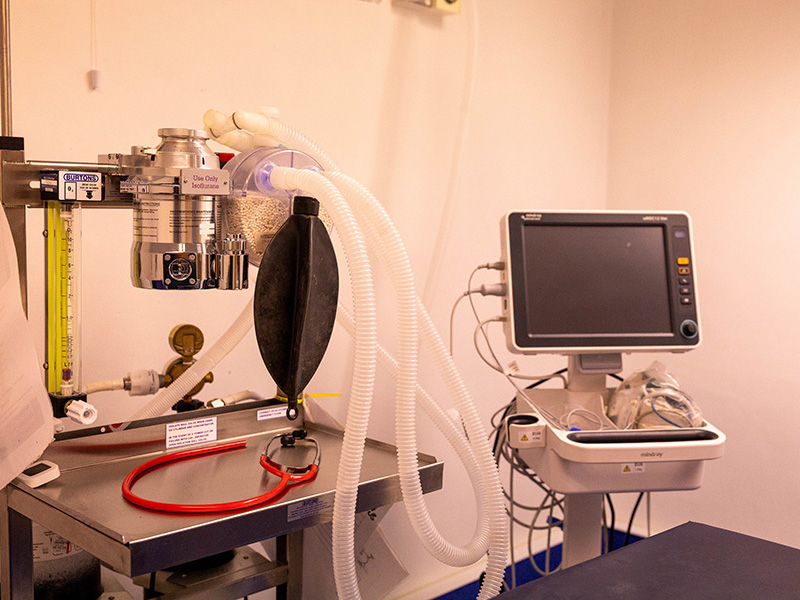
Endoscopy : An endoscope is a fibre optic light which can be passed through the mouth or nose to allow examination of the nose, mouth, trachea (wind pipe) and oesophagus (gullet). This procedure involves the animal having a general anaesthetic. It can aid diagnosis, allows for affected areas to viewed, biopsies to be taken accurately and easy removal of foreign material.
Ultrasound uses high frequency sound waves that are above the range detected by the human ear. These waves travel through the body and bounce back off solid organs, the sound waves are detected and a black and white picture is formed. White areas denote solid objects while black areas denote fluid. It is a painless procedure which does not carry any radiation risk. Sedation and anaesthesia are often not required. It uses include pregnancy diagnosis; examination of the size, shape and consistency of internal organs and examination of abnormal free fluid in the chest or abdomen.
Blood Pressure Monitoring : This is the same technique as used by doctors. A cuff is inflated around the animal’s limb until the artery is occluded at this point the pulse disappears, the cuff is slowly deflated and the pressure when the pulse is detected equals the blood pressure. Unlike in humans we cannot detect the pulse by listening for it with a stethoscope. Instead we have to use a Doppler ultrasound probe.This technology is relatively new and allows quick, painless and accurate measurements to be taken. This measurement is important because, as in humans, a high blood pressure can have serious implications on the animal’s health and there is effective treatment for high blood pressure. Animals that may be particularly at risk of high blood pressure include cats with overactive thyroid glands, renal or cardiac disease. Recent studies suggest it may be beneficial to test all cats over 12 years old. Normal blood pressure in dogs and cats is 135-180 mmHg.
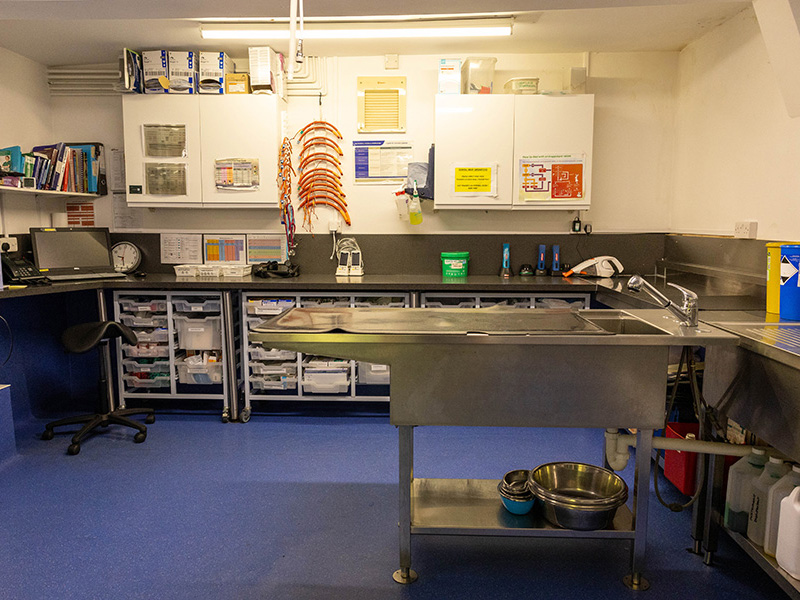
In-house Laboratory : Our laboratory allows us to perform blood tests and get results rapidly. We have both biochemistry and haematology machines. The first provides measures of kidney and liver function it can also be used before an anaesthetic as a health screen. The haematology machine allows us to check white cell counts (indicators of infection) and red cell counts (decreased in anaemia and other disease states). Urine specimens can be tested instantly and can be helpful in diagnosis of disease. We use a microscope to confirm presence of mites in present in skin disease and to look at cells in blood or biopsies.
Hydrotherapy : We have a close relationship with the local hydrotherapy centre and are happy to provide referral for both rehabilitation and pleasure swims.
For more information try herefordcaninehydrocare.co.uk
Osteopath who treats animals : Alex Probert has recently joined our staff to offer her experience working with animals, please contact us for further details. (Photo gallery of Alex at work)
Veterinary Ophthalmologist : This service is useful for those animals which require any referrals for eye complaints, Tim Knott, a specialist in this field is available upon referral from your vet. |